Call for Papers
Important Dates
All deadlines are 11:59 PM AoE (Anywhere on Earth) time.
- Submission Portal: OpenReview
- Submission Deadline: April 3, 2026
- Notification of Acceptance: May 25, 2026
- Camera-ready papers due: TBD
- Workshop Date and Time: July 3, 2026 (9:00 AM - 12:30 PM PT)
Topics of Interest
Most language modeling research today is focused on building generalist models capable of solving a wide range of tasks with the recipe of pretraining at scale, and reinforcement learning based post-training. The increased capabilities of large language models (LLMs) have promised increased productivity and innovation [1] and seen broad consumption by an ever-widening audience for personal and commercial use [2]. However, users’ expectations, values, and workflows can vary significantly across domains, applications, organizations, geography, social groups, cultures, and individuals. Attention to these factors is often missing or under-considered in existing Language Modeling pipelines. Specifically, generalist models have non-uniform performance, for example, for consumers working in sensitive and specialized domains such as law, finance, or health [3, 4]; for individuals, demographics, or cultures less represented online such as speakers of different language varieties [5]. For language models to deliver on their promise of productivity and innovation, particularly in emerging scenarios with widely varying use cases, there is a need to develop models that can be tailored to different consumers (individuals, groups, or organizations), easily controlled by them, and learn over time [6, 7]; models that can reason about their users’ private knowledge and context to provide personalized responses [8, 9]. Alongside methodological questions, model customization raises ethical and security questions, related to learning from copyrighted data, protecting user privacy, and addressing pernicious biases. This is especially relevant in sensitive domains, where model customization can lead to large benefits for stakeholders but is also associated with higher risks.
The topics of this workshop include (but not limited to):
- Data: Data collection, processing, and annotation to aid model customization; analysis of public and private datasets to guide the development of customized models; privacy, and copyright.
- Modeling: New pretraining, fine-tuning, alignment, continuous learning, inference methods for customizing language models; privacy and efficiency for customization. New modeling paradigms for customization such as model ensembles, federated learning, nonparametric models, etc.; customizing models with agentic systems, test-time compute strategies, etc.
- Evaluation of generalist, non-customized models, identifying their shortcomings for varied use-cases; evaluation of customized models.
- Applications: e.g. information seeking, writing assistance, AI assistants etc.; applications in sensitive domains such as law, education, healthcare, finance, etc.; models for communities reflecting sociolects, dialects or other language varieties.
- Broader Impacts: privacy, security, and copyright; intrusiveness, unintended biases; invisibility versus hypervisibility due to customization.
- Open Science: Best practices for open and reproducible science of customizable LMs: dataset release and licensing, open-sourcing models, related privacy, copyright and policy issues.
Guidelines
- Our author guidelines follow the ARR requirements unless otherwise specified.
- Paper submission is hosted on OpenReview.
- We welcome both short (up to 4 pages) and long papers (up to 8 pages), not including references or appendix.
- Please use the provided LaTex template (Overleaf) for your submission. Please follow the paper formatting guidelines general to “*ACL” conferences as specified in the style files. Authors may not modify the style files or use templates designed for other conferences.
- The paper should be anonymized and uploaded to OpenReview as a single PDF.
- You may use as many pages of references and appendix as you wish, but reviewers are not required to read the appendix.
- Posting papers on preprint servers like ArXiv is permitted.
- We encourage each submission to discuss the ethical and societal implications of their work, wherever applicable.
- This workshop offers both archival and non-archival options for submissions. Archival papers will be indexed with proceedings, while non-archival submissions will not.
- The review process will be double-blind.
Organizers


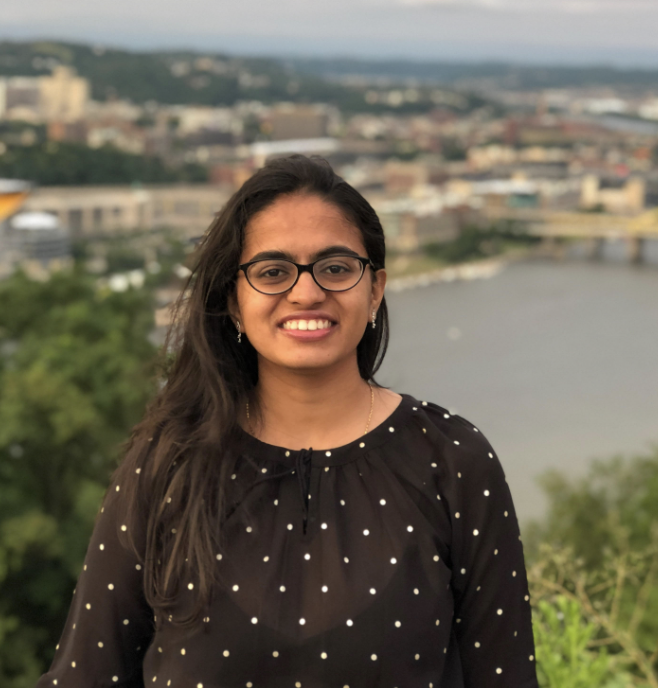
Vidhisha Balachandran
Microsoft Research

Shirley Anugrah Hayati
University of Minnesota
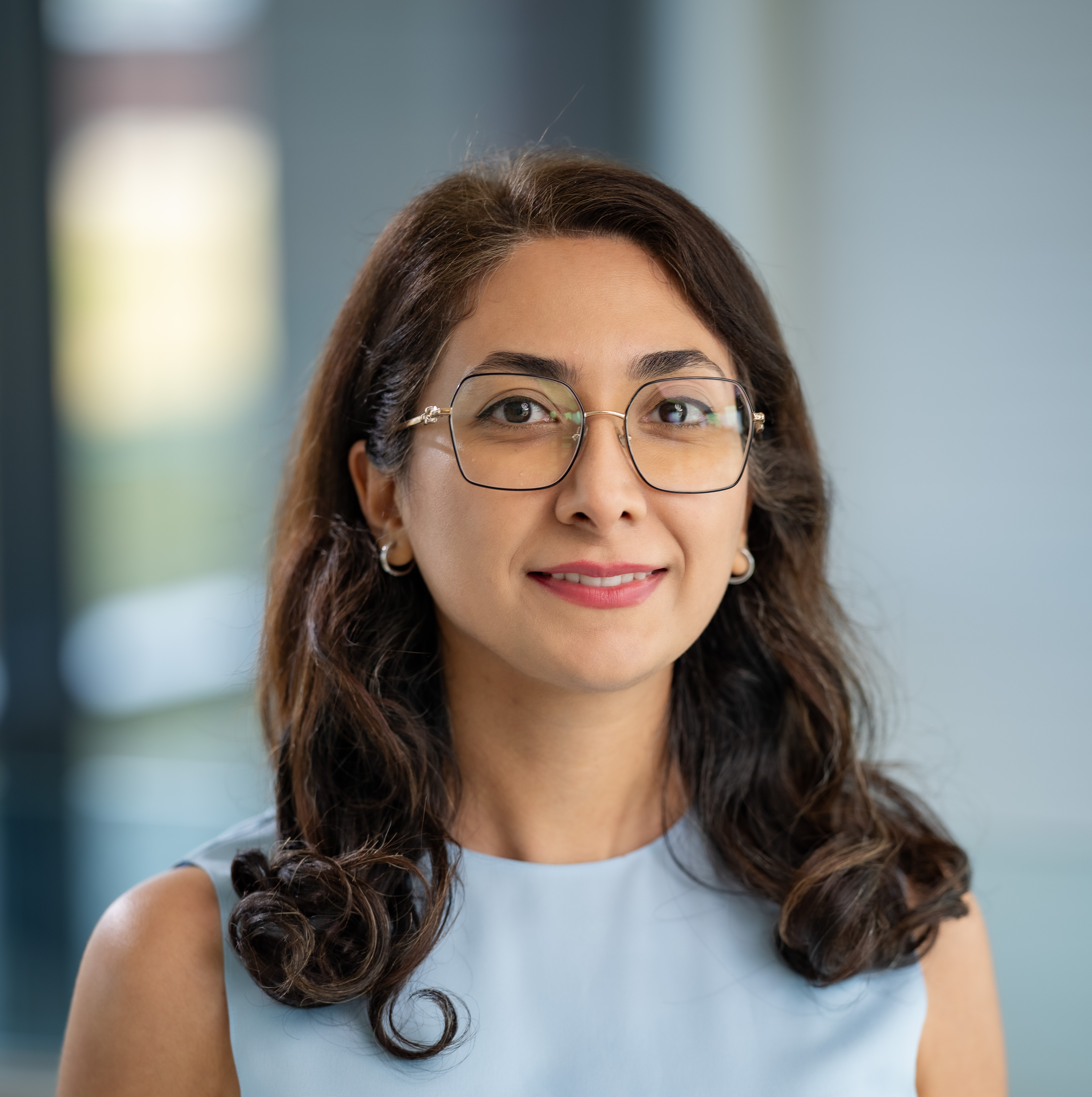
Faeze Brahman
Allen Institute for AI

Hanane Nour Moussa
The Ohio State University

Alireza Salemi
University of Massachusetts Amherst
Steering Committee

Hamed Zamani
University of Massachusetts Amherst

Dongyeop Kang
University of Minnesota
References
[1] Singla, A., Sukharevsky, A., Berteletti, E., Yee, L., & Chui, M. (2025). The next innovation revolution—powered by AI. McKinsey & Company.
[2] Liang, W., Zhang, Y., Codreanu, M., Wang, J., Cao, H., & Zou, J. (2025). The Widespread Adoption of Large Language Model-Assisted Writing Across Society. arXiv preprint arXiv:2502.09747.
[3] Mahari, R., Stammbach, D., Ash, E., & Pentland, A. (2023). The Law and NLP: Bridging Disciplinary Disconnects. In Findings of the Association for Computational Linguistics: EMNLP 2023. Association for Computational Linguistics.
[4] Tam, T. Y. C., Sivarajkumar, S., Kapoor, S., Stolyar, A. V., Polanska, K., McCarthy, K. R., Osterhoudt, H., Wu, X., Visweswaran, S., Fu, S., et al. (2024). A Framework for Human Evaluation of Large Language Models in Healthcare Derived from Literature Review. NPJ digital medicine, 7(1), 258.
[5] Rystrøm, J., Kirk, H. R., & Hale, S. (2025). Multilingual != Multicultural: Evaluating Gaps Between Multilingual Capabilities and Cultural Alignment in LLMs. arXiv preprint arXiv:2502.16534.
[6] Narayanan, A., & Kapoor, S. (2025). AI as Normal Technology. Knight First Amend. Inst.
[7] Challapally, A., Pease, C., Raskar, R., & Chari, P. (2025). The GenAI Divide: State of AI in Business 2025.
[8] Mireshghallah, N., Kim, H., Zhou, X., Tsvetkov, Y., Sap, M., Shokri, R., & Choi, Y. (2024). Can LLMs Keep a Secret? Testing Privacy Implications of Language Models via Contextual Integrity Theory. In The Twelfth International Conference on Learning Representations.
[9] Sorensen, T., Moore, J., Fisher, J., Gordon, M. L., Mireshghallah, N., Rytting, C. M., Ye, A., Jiang, L., Lu, X., Dziri, N., Althoff, T., & Choi, Y. (2024). Position: A Roadmap to Pluralistic Alignment. In Forty-first International Conference on Machine Learning.